

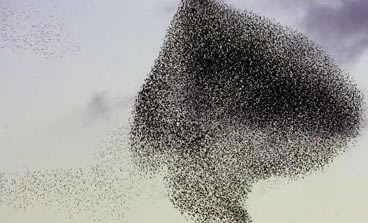
| SOL 2007 International REACH OUT Conference Organising team: Liselotte Baeijaert, Louis Cauffman, Saskia Holvoet, Magda Ral, Anton Stellamans, Christophe Van Coppenolle, Marc Van Houtte, Chris Verheyde 11-12-13 May 2007 – Bruges – Belgium In Memoriam Insoo Kim Berg She passed away unexpectedly on January 10th.The Korzybski Institute Belgium thanks the SOL community for the honour of hosting the next SOL conference. Korzybski Institute’s managing director, Louis Cauffman, will be your host together with the SOL2007 T.E.A.M.Over the years the solution focused technology has been refined and tuned for the organisational realm. The solution focused paradigm has matured, resulting in applications in many different fields. Now the moment has come to REACH OUT and connect the SF world to exciting and innovative scientific approaches:the science of happiness,the study of resilience,neuroscience andnetworking models (from non-zero sum games to swarm intelligence).More information on these themes can be found here.These scientific endeavours offer support for the SF model and help us to move beyond SF techniques.The conference is designed in a format of four integrated layers: conversations, interviews, workshops and swarms.Conversations: Instead of panels, we choose to organize conversations amongst specialists from the different reach out themes who will be interviewed by a host and then be invited to an open conversation amongst them. The audience is invited to act as a reflecting team to spice their conversations with remarks and questions. Dr. James Kennedy will deliver a keynote speech to introduce the topic of swarm intelligence.Triangular interviews: Instead of the classical presentations where clients and their consultants can present a precooked story, we choose the format of an interview. The clients present their case, the consultants share their initial ideas about the strategy to handle the case. The audience will be invited to work in small groups on how they would tackle the challenge. Then an interviewer will do a live consultation with the client and the consultant. The goal is that everybody is involved and that we get an opportunity to see the reality of the casework in real live (instead of just talking about it).Workshops: In the afternoons, there is a possibility to choose between workshops that will be organised around the reach out themes.Swarms: Feedback from previous SOL conferences shows that we all love to have lots of time and space to hang around. We will organize different locations where participants can swarm around one of the reach out themes or a topic of your interest. These locations will be updated continuously with information and material from the other three layers. |
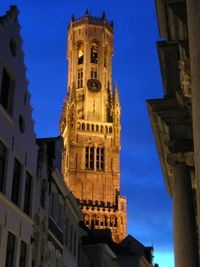
 Reach OutPhoto AlbumProgrammeFee & RegistrationSOL 2007 ResourcesVenue & AccommodationContactsTeam Reach OutPhoto AlbumProgrammeFee & RegistrationSOL 2007 ResourcesVenue & AccommodationContactsTeam | SOL 2007 International REACH OUT Conference 11-12-13 May 2007 – Bruges – BelgiumUPDATE:The final programme update can be found here:IntroductionFridaySaturday – part 1 – part 2SundayInformation ThursdayFridaySaturdaySunday08:30-09:30 Registration + Mingling with Coffee and Refreshments08:30-09:00 Mingling with Coffee and Refreshments08:30-09:00 Mingling with Coffee and Refreshments09:30-10:10 Welcome & Conference Introduction by Louis Cauffman09:00-09:50 Keynote by Prof. James Kennedy09:00-10:00 Reach out to the Future with Mark McKergow10:10-11:00 Conversation on Neuroscience, Happiness and Resilience with Luc Isebaert, Alasdair Macdonald and Michael Hjerth09:50-10:10 Break10:00-10:20 Break10:10-11:00 Conversation on Networking models with James Kennedy, Peter Stam and Louis Cauffman10:20-11:50 Workshops 411:00-11:30 Break11:00-11:20 Break11:50-12:10 Break11:30-13:00 Workshops 111:20-12:50 Workshops 312:10-13:00 Closing ceremony + Handover to SOL2008 Colone13:00-14:10 Lunch12:50-14:00 Lunch13:00-14:00 Lunch14:10-15:00 Triangular Interview14:00-14:50 Triangular Interview15:00-15:30 Break14:50-15:10 Break15:30-17:00 Workshops 215:10-17:00 Swarm Open Space17u00 Sol Steering Group Meeting (optional)20:30-22:00 Pre-conference Reception in Bruges’ Gothic Town Hall18:45 Meeting in frot of Bruges’ Town Hall (Burg) for the Optional Evening Event: Brewery Visit + Dinner + Boat Trip on Bruges’ canals.20:00 Carillon Concert Gala Dinner & SOL Cabaret in Bruges’ Belfry |
 Reach OutPhoto AlbumProgrammeFee & RegistrationSOL 2007 ResourcesVenue & AccommodationContactsTeam Reach OutPhoto AlbumProgrammeFee & RegistrationSOL 2007 ResourcesVenue & AccommodationContactsTeam | SOL 2007 International REACH OUT Conference 11-12-13 May 2007 – Bruges – BelgiumRegistration formPlease fill out this registration form and return it to: Christophe Van Coppenolle Email: cvancoppenolle(at)skynet.be Mail: SOL2007, Christophe Van Coppenolle, Kortrijksestraat 467, 8020 Ruddervoorde, Belgium Fax: ++32 (0)50/278584 Registration feeEarly bird fee: 850 € (pay before March 15 2007)Regular Fee: 950 €Fee for Contributers: 500 €Included in your conference fee:All coffee breaks & lunchesGala dinner and SOL Cabaret on Saturday eveningThe fees contain no VAT and no additional VAT will be billedOptional:Friday evening: Beautiful boat trip on the canals of Bruges, dinner and brewery visit: 30 €PaymentsBanking transfer Payments made out to: Christophe Van Coppenolle Kortrijksestraat 46 8020 Ruddervoorde Bank account nr: 063-4227264-39Name of the Bank: DexiaAddress: Monnikenwerve 200 – B8000 Brugge – Belgium Iban: BE13 0634 2272 6439 Bic: GKCCBEBB Warning: No paid enrollement, no entry |
 Reach OutPhoto AlbumProgrammeFee & RegistrationSOL 2007 ResourcesVenue & AccommodationContactsTeam Reach OutPhoto AlbumProgrammeFee & RegistrationSOL 2007 ResourcesVenue & AccommodationContactsTeam | SOL 2007 International REACH OUT Conference 11-12-13 May 2007 – Bruges – BelgiumSOL 2007 ResourcesProf. James Kennedy’s plenary presentation on Swarm IntelligencePeter Stam’s plenary presentation on Buidling a Large Solution Focused OrganisationAlex Steel, The Art of Conversation. Lessons from Jazz |
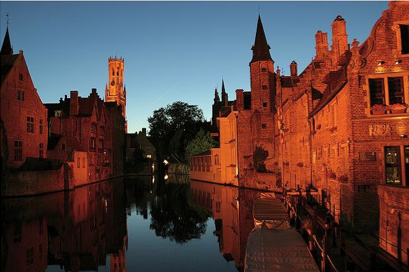
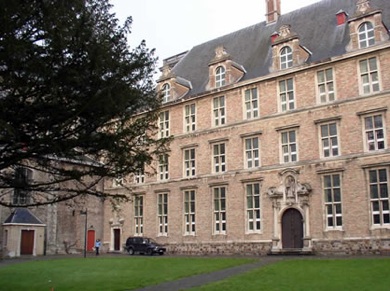 Reach OutPhoto AlbumProgrammeFee & RegistrationSOL 2007 ResourcesVenue & AccommodationContactsTeam Reach OutPhoto AlbumProgrammeFee & RegistrationSOL 2007 ResourcesVenue & AccommodationContactsTeam | SOL 2007 International REACH OUT Conference 11-12-13 May 2007 – Bruges – BelgiumBrugesGetting thereVenueAccomodationBruges The city of Bruges, the ‘Venice of the North’, is one of the most beautiful towns in Europe. The city dates back to the 11th century and managed to preserve its medieval architecture. The historic centre of Bruges is a UNESCO World Heritage Site. Bruges is a very charming town with friendly people, beautiful canals, and good food and beer. It will be the ideal setting for this 2007 SOL Conference.Here you will find a map of Bruges The conference venue is located in G4 (logo= purple house with number 04). Click here for a detailed pdf version. On this interactive map you can easily locate any street in Bruges. Get a taste of Bruges through these interactive 360° views: Strooi Brigde (close to congress venue) – Rozen Hoedkaai – Burg – Market square – Beguinage – St. Bonifatius Brigde.Getting there By air: There are two trains per hour fom Brussels Airport to Bruges (1.30h). The train schedule can be checked here. By train: you can take the Eurostar from the UK or the Thalys coming from France, the Netherlands or Germany.Venue On the edge of Bruges city centre stands a former abbey built by the Cistercian monks in the seventeenth century. At the time a leading intellectual centre, it is now a seminary for priests and a conference venue. The venue consists of a building with a monumental church, and peaceful gardens. Address: Episcopal Seminary, Potterierei 72, 8000 Bruges. Click here for a map.Accomodation May is a high season in Bruges. Therefore we made reservations for several rooms in the following hotels. All hotels are located in the centre of town. These reservations will last until 31 January 2007. We advise you to book these rooms as soon as possible. Underneath is a list of hotels which can be booked via Tourism Bruges.SOL2007 participants enjoy a reduced fee. NB. Indicated distance is the distance between the hotel and the conference venue. Other hotels, bed and breakfasts etc can be found via this website.Hotel Heritage **** Nikolaas Desparsstraat 11 Distance: 1,1 km = 16′ walk. 15 rooms reserved Prices between 140€ & 404€Hotel Fevery *** Collaert Mansionstraat 3 Very close to the venue Distance: 0,6 km = 8′ walk 6 rooms reserved Price: 80€Hotel Flanders **** Langestraat 38 Distance: 1,1 km = 16′ walk. 10 “superior single” rooms reserved With swimming pool Price: Thursday night: 140€ Friday and Saturday night: 155€Hotel Jacobs *** Baliestraat1 Close to conference venue Distance: 0,6 km = 9′ walk 10 rooms reserved Single: 82€Hotel Sablon *** Noordzandstraat 21 Distance: 1,5 km = 22′ walk 25 rooms reserved Single: 89€ – Double: 120€Hotel Ter Brughe **** Oost-Gistelhof 2 Distance: 0,8 km = 11′ walk 20 rooms reserved Prices between 110€ & 130€Hotel Ter Duinen *** www.terduinenhotel.be Langerei 25 Distance: 0,4 km = 5′ walk Closest to the venue 5 rooms reserved Langerei 52 Price: 125€Hotel Ter Reien *** Langestraat 1 Distance: 1,0 km = 14′ walk 20 rooms reserved 10 minutes from venue Single: 89€Hotel Walburg **** Boomgaardstraat 13-15 Distance: 1,0 km = 14′ walk 10 rooms reserved Single: 155€You can also book the following hotels via Tourism Bruges. Please use this form to make your reservation and profit from the SOL2007 reduction. Reservation deadline is 11 March 2007:Golden Tulip De Medici **** Potterierei 15 Distance: 0,4 km = 5′ walk Closest to the venue Single: 110€ – Double 130€Best Western Premier Acacia **** Korte Zilverstraat 3a Distance: 1,4 km = 21′ walk Single: 120€ – Double 135€Best Western Premier Navarra **** Sint-Jakobsstraat 41 Distance: 1,3 km = 18′ walk Single: 139€ – Double 165€Relais Oud Huis Amsterdam **** Spiegelrei 3 Distance: 0,8 km = 12′ walk Single: 140€ – Double: 140€ |

 Reach OutPhoto AlbumProgrammeFee & RegistrationSOL 2007 ResourcesVenue & AccommodationContactsTeam Reach OutPhoto AlbumProgrammeFee & RegistrationSOL 2007 ResourcesVenue & AccommodationContactsTeam | SOL 2007 International REACH OUT Conference 11-12-13 May 2007 – Bruges – BelgiumFor all info regarding registration please contact:Christophe Van CoppenolleE-mail: cvancoppenolle(at)skynet.beTel: +32 (0) 50/27 85 84 Fax: +32 (0) 50/27 85 84Kortrijksestraat 467 8020 Ruddervoorde Bank Account Number: 063-4227264-39 Iban: BE13 0634 2272 6439 Bic: GKCCBEBB Proposals for interviews and workshops can be sent to:Anton Stellamans:E-mail: Anton.Stellamans(at)ivco.beTel.: +32 (0) 16 43 30 43Mobile: +32 (0) 477 695 693Fax: +32 (0) 2 569 25 49Skype: antonstellamans |
| Reach OutPhoto AlbumProgrammeFee & RegistrationSOL 2007 ResourcesVenue & AccommodationContactsTeam | SOL 2007 International REACH OUT Conference 11-12-13 May 2007 – Bruges – Belgium“Together Each Achieves More”The SOL2007 T.E.A.M. is ready to welcome you in Bruges:     Louis Cauffman – webChris Verheyde Louis Cauffman – webChris VerheydeConference coordinatorLiselotte Baeijaert– webSaskia Holvoet – web    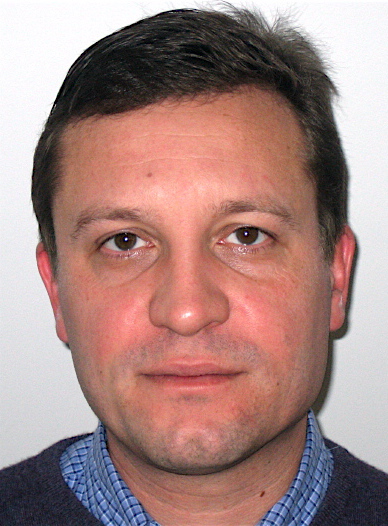 Marc Van Houtte – webAnton Stellamans – webMagda RalChristophe Van Coppenolle“Reach out, we’ll be there!” Marc Van Houtte – webAnton Stellamans – webMagda RalChristophe Van Coppenolle“Reach out, we’ll be there!” |
| Reach OutPhoto AlbumProgrammeFee & RegistrationSOL 2007 ResourcesVenue & AccommodationContactsTeam | SOL 2007 International REACH OUT Conference 11-12-13 May 2007 – Bruges – BelgiumSHORT INTRO to the different reach out themesBy Louis CauffmanIn the following paragraphs you will find basic information on the different themes that we have chosen as anchors for SOL2007. The different themes actually can be collected under the umbrella of what one might call ‘ the science of Mind, Brain, Genes and Evolutionary Psychology’. The literature that we suggest is no indication of our personal preferences but serves only as a starting point that can help you move around in the realms of the different themes. You can use the references in each publication as starting points that will set you of in the direction of your personal liking. Of course, you will use the internet to travel faster to your destination of ever expanding learning and you will find out (again and again) that the journey is so much more important than the destination.We do not doubt that you will discover that all the themes have a very direct link to the solution focused model and that they offer additional ‘scientific’ foundations that go far beyond the research on techniques and outcome results (however important these are). Enjoy.The Science of Happiness: The leader of the tiny Himalayan state of Bhutan is more interested in the Gross National Happiness than in the Gross National Product. His Holiness the Dalai Lama is writing about happiness since many years (see book: The Art of Happiness, 1998). Buddhism has for many centuries now, offered a manual for living a happy (read: a satisfying) life. In the west, Epictetus wrote in the first century his Manual for the Art of Living. Yet one does not have to be a Buddhist or an ancient philosopher to be interested in happiness! In contrast to this vast body of literature, one can wonder how it comes that the ‘new’ science of psychology in the 20th century was primarily occupied (read: obsessed) with everything that could possibly go wrong with humans, single mindedly focused (read: blinded) by pathology, even to the extent that it took a brave psychologist like Martin Seligman (see: http://www.ppc.sas.upenn.edu) (famous for his learned helplessness syndrome), until the late nineties before he discovered that you can reverse these ideas into learned happiness. His important book, Authentic Happiness (2002) really paved the road for the vast stream of academic and professional articles and books on the subject. This opening of the academic field and expanding the importance of the theme of happiness, is a real accomplishment that the famous psychologist Daniel Kahneman (see http://weblamp.princeton.edu/~psych/psychology/research/kahneman )was not able to do (even if he won the Nobel price in 2002 for his foundational work).You might want to start out from the following sources to dive into this theme: *Bertrand Russell: The Conquest of Happiness (1961) *Daniel Nettle: Happiness, the science behind your smile (2005) (http://www.staff.ncl.ac.uk/daniel.nettle ) *Baker, Greenberg and Hemingway: What happy companies know (2006) *Layard Richard: Happiness, lessons from a new science (2005) (http://www.lse.ac.uk/people/r.layard@lse.ac.uk )The Study of Resilience: Family therapists moved psychotherapy from a strict individual approach (that was only interested in trying to understand why a person did not function well) to an interactional model where the relations between the members of the system were studied in the hope to change rules in the interaction so that the problems would go away. Yet, most (classical) family therapists were using a deficit model that was (and still is) very problem focused. It is very interesting to discover that the strength based approach to the functioning of systems (from couples over families to large groups and organisations) did not originate from psychology nor psychiatry departments and schools. The interest in resources, strengths, competencies in human systems was first studied in departments of sociology and social work. And we all know that Steve de Shazer was a sociologist by training while Insoo Kim Berg and Yvonne Dolan are social workers. Isn’t that amazing! Our working definition of resilience is: ‘the ability to withstand and rebound from disruptive (life) events, to learn from these experiences and develop a pro-active response mechanism (‘prodaptation’) that helps one to ‘bounce forwards’. The exceptional usefulness of the resilience concept for organisational work is evident. Instead of concentrating on what not works, you can choose to tap into what does work. You can help staff and teams to appreciate the cognitive, emotional and behavioural strengths both on a personal and an interpersonal level.You might want to start out from the following sources to dive into this theme:*Walsh Froma: Strengthening Family Resilience (3th edition 1998) -the basic book! (http://www.ssa.uchicago.edu/faculty/f-walsh.shtml ) *Sheffi Yosh, The Resilient Enterprise (2005) (http://resilient-enterprise.mit.edu ) *Warren Bennis and Heifetz Ronald: Harvard Business on Building Personal and Organizational Resilience (2003)Neuroscience: Is the time coming that psychologists no longer have to rely solely on what their clients tell them or on what they themselves conceptualize in their sophisticated psychologist minds? Can it really be the case that the psychologist of tomorrow only needs to look at the screen where the results of the fMRI show up? Well, this is all a little (but not more than a little, mind you) premature. Yet, the neurosciences are developing on a daily basis. What was unheard of in the year 2000, is per today reality. Mind and body truly are one again. The nurture-nature dichotomy is replaced by careful (yet expanding) research that indicates the interwoveness of genes, behaviour and circumstances. Recent neuroscientific developments offer useful insights for all of us who earn their living with ‘influencing people for the better’. Managers, leaders and coaches can benefit from the knowledge that the neurosciences offer us in order to become even better at what we (try to) do.You might want to start out from the following sources to dive into this theme:*LeDoux Joseph: Synaptic Self: how our brains become who we are (2002) (see: http://www.cns.nyu.edu/home/ledoux ) *Pinker Steven: How the Mind works (1997) and: The Blank Slate (2002) (see: http://pinker.wjh.harvard.edu ) *Pink Daniel: A Whole new mind (2006) (see: http://www.danpink.com ) *Damasio Antonio: Descartes’ Error (1994) (see: http://www.usc.edu/schools/college/faculty/faculty1008328.html )Swarm Intelligence, Non-Zero sum games and Networking models: Intelligence used to be ‘something’ inside the head of an individual, as early researchers in artificial intelligence thought. Indeed, this is the way we experience our own thinking, as if we hear private voices and see private visions. But this experience can lead us to overlook what should be our most noticeable quality as species: our tendency to associate with one another, to socialize. If we want to model human intelligence, we should do so by modelling individuals in a social context interacting with each other. These social interactions result in a change in the thinking process -not just the content- of the participants. Since the time we were hunter-gatherers, evolution helped us to cooperate. In the light of harsh circumstances, humans developed the ability to enter non-zero sum games. A zero sum games is like tennis: 1 wins, 1 looses. Non-zero sum games makes all involved into winners and changes the game in the process. Particularly relevant to the solution focused approach are the insights from the study of swarm intelligence: 1. Mind is social, 2. Human intelligence results from interaction and 3. culture and cognition are inseparable consequences of human sociality.You might want to start out from the following sources to dive into this theme: *Kennedy James and Eberhart Russell: Swarm Intelligence (2001) (see: http://www.cis.syr.edu/~mohan/pso ) *Wright Robert: NonZero, history, evolution and human cooperation (2000) (see: http://www.nonzero.org ) *Axelrod Robert and Cohen Michael: Harnessing Complexity: organizational implications of a scientific frontier (2001) (see: http://www-personal.umich.edu/~axe ) |